Design Technology
‘It’s not just the beauty of a building you should look at; it’s the construction of the foundation that will stand the test of time.’
David Allen Coe
In Design and Technology (DT), we recognise that all children should have the skills and knowledge to design, make, and evaluate products that solve real and relevant problems. At St Pius X, we aim to provide a rich learning environment where children can transfer their DT knowledge to a variety of contexts, becoming resourceful, innovative and enterprising citizens.
Intent: Our Vision for Design and Technology
Our curriculum is designed to empower pupils to think like engineers and designers. Our intent is for all pupils to:
- Solve Real-World Problems: Design and make products for a variety of users and purposes within relevant contexts.
- Integrate Knowledge: Draw upon disciplines such as mathematics, science, engineering, computing, and art to inform their designs.
- Encourage Innovation: Foster a culture where children feel safe to take risks and become “capable citizens” of a technological world.
- Develop Critical Understanding: Evaluate past and present designs to understand the impact of technology on daily life and the wider world.
Implementation: How We Teach
We deliver a high-quality DT education that contributes to the creativity, culture, and well-being of our nation. Our teaching follows a rigorous cycle of Design, Make, and Evaluate.
Cross-Curricular Synergy
We ensure that DT is not taught in a vacuum. By drawing on other subjects, pupils see the practical application of their learning:
- Science & Engineering: Applying knowledge of forces, electricity, and materials.
- Mathematics: Using precise measurement and geometry in construction.
- Computing: Utilizing programming and control in automated products.
The Design Cycle
Each project follows a systematic approach:
- Research & Design: Pupils investigate existing products and generate ideas through annotated sketches and prototypes.
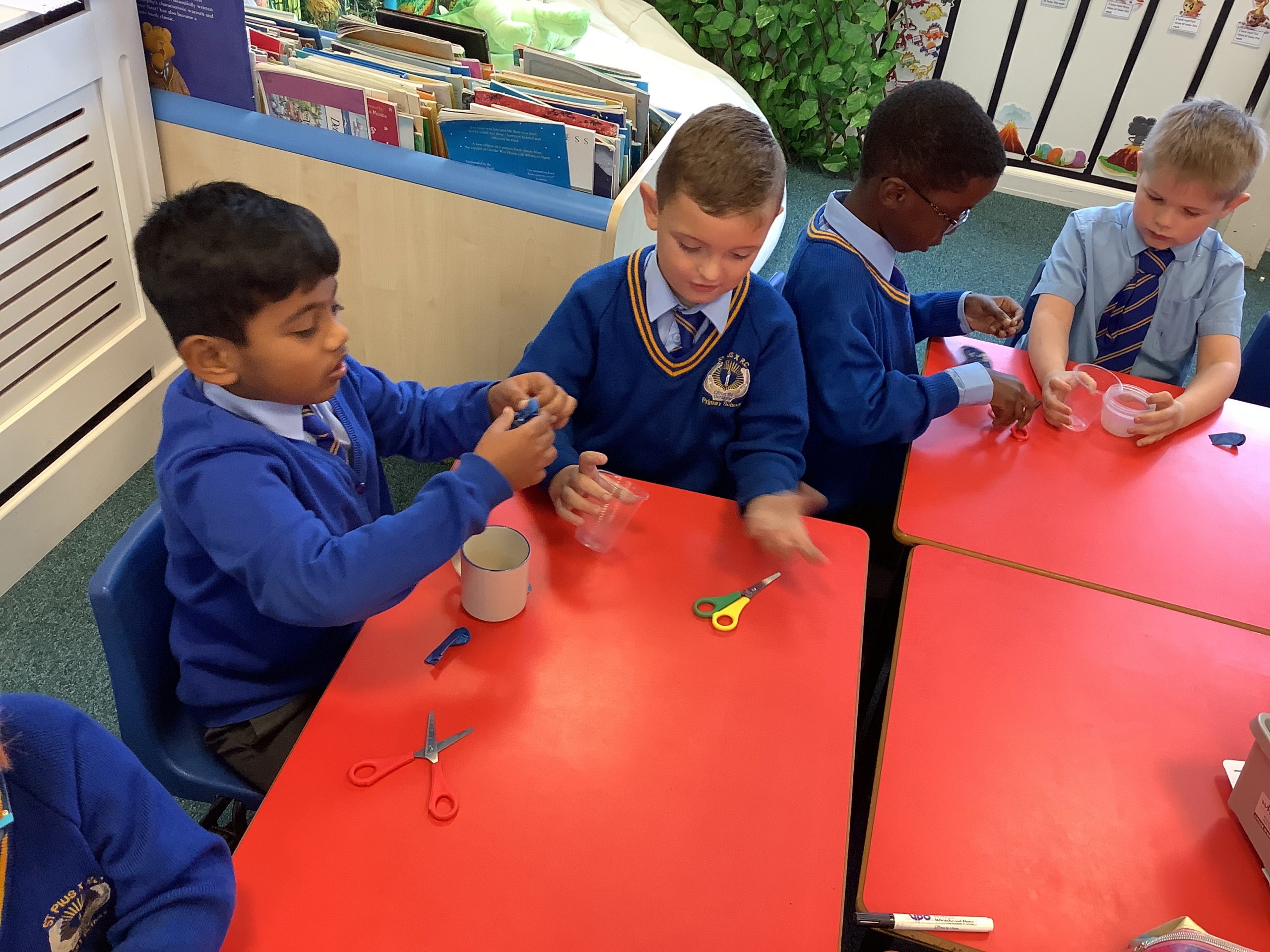
- Making: Children use a range of tools and materials to bring their designs to life, focusing on functional and aesthetic qualities.
- Evaluating: Pupils test their products against a design brief, reflecting on their work and the work of others to suggest improvements.
Securing Foundational Skills
We believe that technical proficiency and the ability to articulate ideas are the foundations of successful design.
| Focus Area | Strategy & Approach |
| Tool Mastery | Systematic teaching of how to use tools safely and effectively, from simple scissors to more complex joining techniques. |
| Vital Vocabulary | Incorporating Tier 2 and Tier 3 subject-specific words in every module. Pupils use dual coding (images paired with text) to expand their repertoire. |
| Oracy & Expression | Pupils are encouraged to speak in full sentences when presenting findings, using technical language to articulate their learning. |
| Material Knowledge | Developing an understanding of the properties of different materials—such as textiles, food, and construction components—to make informed choices. |
Impact: Our Outcomes
Through our ambitious and integrated curriculum, pupils at St Pius X develop the essential skills required for the 21st century.
- Resourceful Problem Solvers: Pupils leave equipped with the ability to identify needs and create practical solutions.
- Critical Thinkers: Our children can evaluate the success of a product and understand how design influences the wealth and well-being of society.
- Confident Communicators: Through our focus on “Vital Vocabulary,” pupils can explain complex design choices and engineering concepts with precision.
- Future Innovators: Our pupils gain a lifelong appreciation for design and technology, ready to contribute to the creative and industrial world beyond primary school.
Our commitment to building “foundations that stand the test of time” ensures that every child at St Pius X is prepared to build a better future.