Science
At St Pius X, we provide pupils with opportunities to develop scientific knowledge and conceptual understanding through the specific disciplines of biology, chemistry and physics. We encourage children to explore the nature, processes and methods of science through enquiries that help them answer questions about the world around them. Our goal is to equip children with the knowledge required to understand the uses of science today and for the future, enabling them to become educated and informed citizens.
Intent: Our Vision for Science
Our curriculum is designed to move pupils from curious explorers to methodical young scientists. Our intent is built upon:
- Substantive Mastery: Constructing an extensive and connected knowledge base where pupils use firm foundations to integrate new learning.
- Disciplinary Excellence: Teaching pupils how to collect, interpret and evaluate evidence through a taught, rather than assumed, approach.
- Expert Mental Models: Organizing the National Curriculum into meaningful “chunks” to reduce cognitive load and create coherent, long-term memories.
- Scientific Citizenship: Empowering children to understand the vital role science plays in the modern world and their future.
Implementation: How We Teach
We follow the CUSP Science curriculum, which ensures that teaching is explicit, cumulative and organized into the three distinct domains of Biology, Physics, and Chemistry.
Working and Thinking Scientifically
Scientific analysis is developed through the IPROF criteria, which we call “Thinking Scientifically.” We explicitly teach pupils to:
- Identify and Classify: Grouping and naming according to observable features.
- Pattern Seek: Identifying relationships between variables.
- Research: Using secondary sources to find answers.
- Observe over Time: Tracking changes in the natural and physical world.
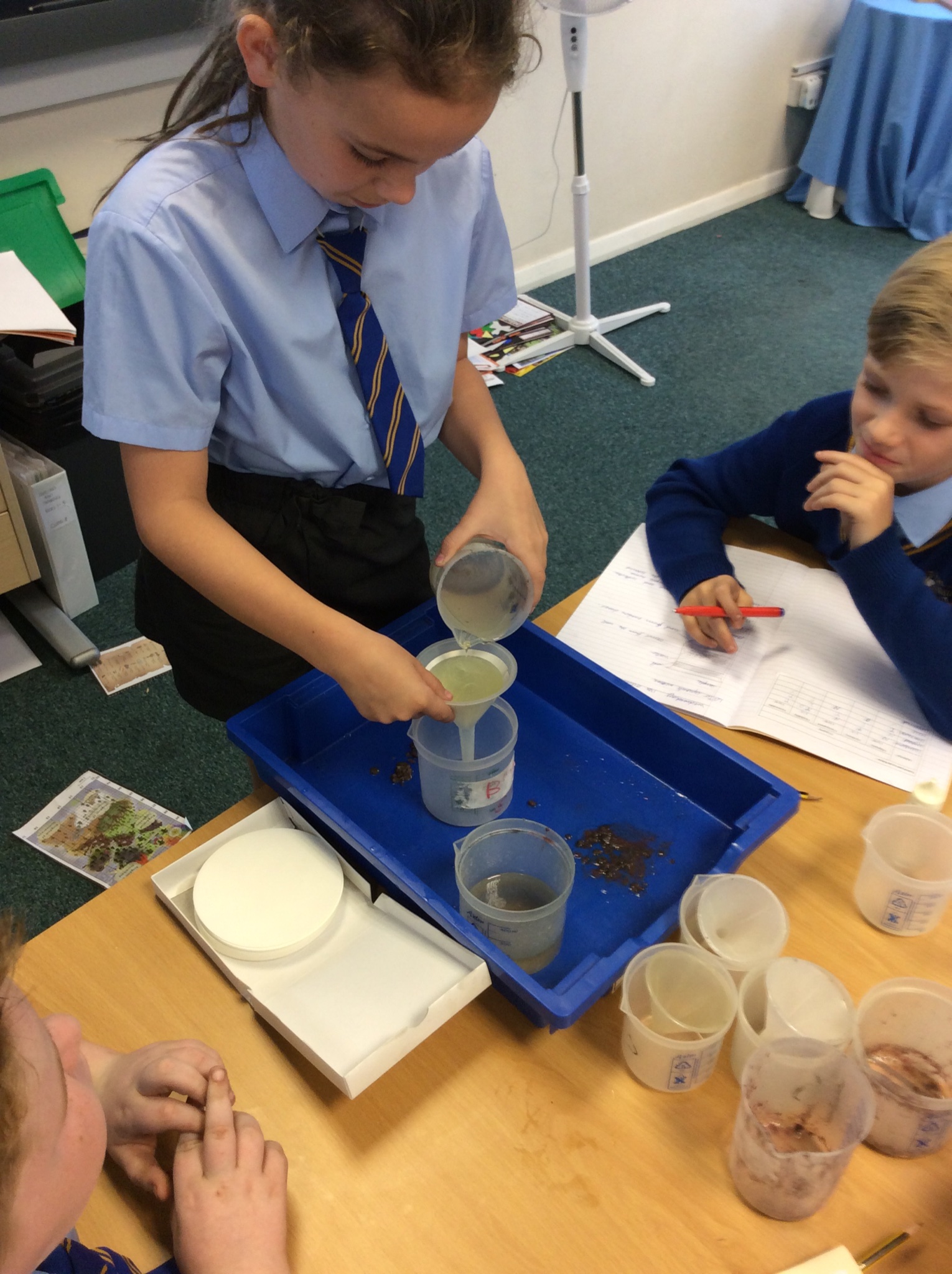
- Fair and Comparative Testing: Conducting controlled experiments to ensure accuracy.
Explicit Vocabulary and Concepts
Whether learning about a concrete concept like “plant” or an abstract idea like “biodiversity,” we utilize explicit vocabulary instruction. We teach high-frequency Tier 2 words alongside subject-specific Tier 3 words to ensure children can articulate their findings with precision.
Securing Foundational Skills
We believe that pupils need a secure mental model in which to position new knowledge. We prioritize “Working Scientifically” through structured coverage maps and assessment toolkits.
| Knowledge Type | Focus Area |
| Prior Learning | Connecting new content, like Year 1 “Animals, including humans,” to EYFS explorations of the natural world. |
| Misconception Management | Explicitly revealing “non-examples” against accurate content to challenge misconceptions carefully. |
| Inter-disciplinary Concepts | Explicitly teaching and connecting big ideas, such as the particle model, across the different domains of science. |
| Cognitive Load | Sequencing content into manageable chunks to help pupils integrate prior understanding and accelerate learning. |
Impact: Our Outcomes
Through our research-led and ambitious approach, pupils at St Pius X become articulate and capable scientists.
- Evidence-Based Thinkers: Our pupils don’t just “do” experiments; they understand how to evaluate evidence and seek patterns to answer big questions.
- Expert Knowledge: Students graduate with an ever-broadening and coherent mental model of the subject, avoiding fragmented or superficial understanding.
- Articulate Citizens: Through our focus on Tier 2 and Tier 3 vocabulary, pupils can explain, predict and conclude using professional scientific language.
- Scientific Adventurers: Our children leave St Pius X equipped with the tools to continue their exploration of the universe, possessing a deep appreciation for the impact of science on their daily lives.
Our commitment to a high-quality science education ensures that every child can use their five senses and their scientific training to navigate and understand the world.